
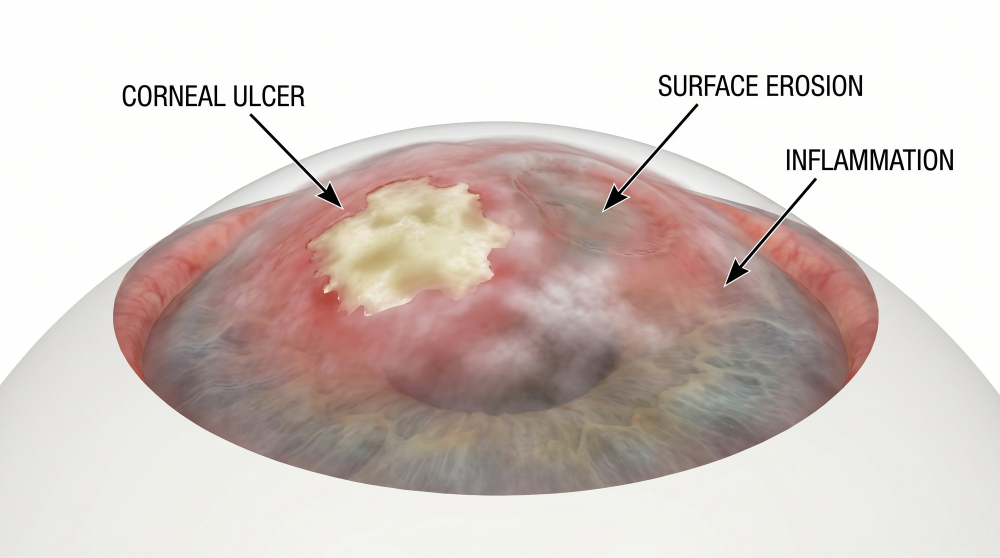
Eye health is important for everyone. A corneal ulcer is a serious eye problem that can threaten your vision. If you notice any signs of a corneal ulcer, you should seek urgent eye care. Early treatment for corneal ulcers can help prevent lasting damage. Understanding the symptoms, causes, and prevention tips can protect your eyes and keep them healthy.
What Is a Corneal Ulcer?
The cornea is the clear, dome-shaped surface at the front of your eye. It helps focus light and protects the eye from germs and dirt. A corneal ulcer is an open sore or wound on the cornea. Often, this sore is caused by an infection, but injury or dry eyes can also lead to ulcers. According to the World Health Organization, corneal ulcers are a leading cause of vision loss worldwide.
Common Symptoms of Corneal Ulcer
Recognizing corneal ulcer symptoms early is key. While some signs may seem mild at first, they can get worse quickly. For example, you might notice:
Because these symptoms can appear with other eye problems, it is important to see an eye doctor right away. Even mild discomfort should not be ignored.
Causes and Risk Factors
Many things can cause a corneal ulcer. However, infections are the most common reason. Bacteria, viruses, fungi, or parasites can enter the eye and cause an ulcer. The Centers for Disease Control and Prevention (CDC) notes that people who wear contact lenses have a higher risk. Other risk factors include:
Because some causes are preventable, knowing your risks can help you protect your eyes.
How Corneal Ulcers Are Diagnosed
If you have symptoms, an eye doctor will examine your eye closely. First, they may use special drops to make the ulcer easier to see. Then, they might gently take a sample from the ulcer to find out what type of infection is present. This helps the doctor choose the best treatment for your corneal ulcer. Early diagnosis can prevent serious problems, including vision loss.
Treatment Options for Corneal Ulcers
Treatment for corneal ulcer depends on the cause. Often, doctors prescribe antibiotic, antifungal, or antiviral eye drops. In some cases, you may need more than one type of medicine. For example, if the ulcer is deep or large, you might need stronger drops or even pills. Sometimes, doctors use special eye drops to reduce pain and swelling. Rarely, surgery may be needed if the ulcer does not heal. According to medical journals, starting treatment quickly gives the best chance for full recovery.
Why Immediate Treatment Is Critical
Corneal ulcers can get worse fast. Without urgent eye care, the infection may spread deeper into the eye. This can cause scarring, vision loss, or even blindness. Even small ulcers can leave permanent marks on the cornea. Because of these risks, experts stress the need for early and proper treatment. Quick action can save your sight and prevent long-term problems.
Tips for Prevention and Eye Health
Although not all corneal ulcers can be prevented, you can lower your risk. Following these tips can help keep your eyes safe and healthy:
By taking these steps, you can help in preventing corneal ulcers and protect your vision for years to come. Prioritise your well-being with timely care and expert advice at Esquare Eye and ENT Hospitals .