
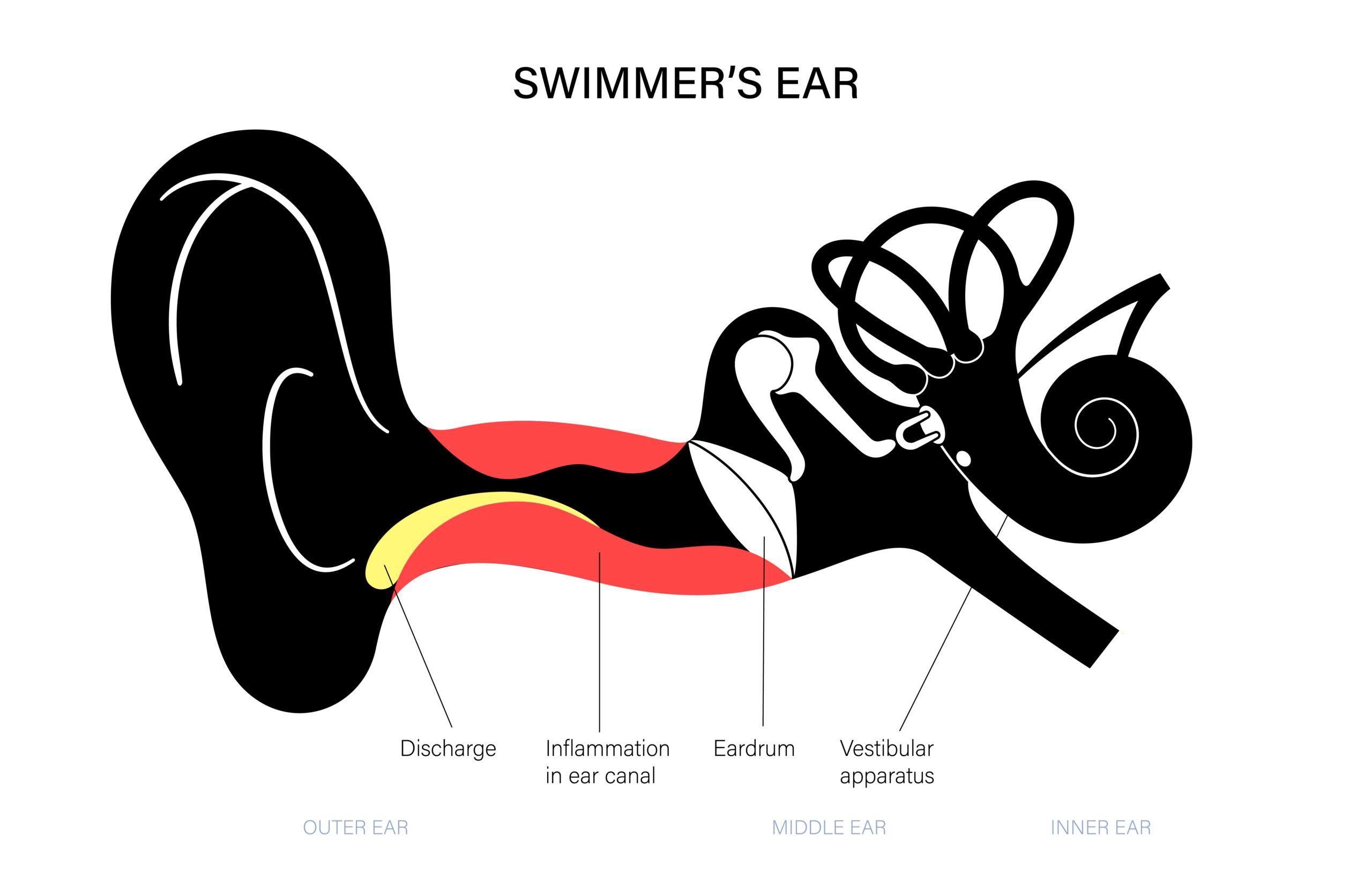
What is Swimmer’s Ear (Otitis Externa)?
Swimmer’s Ear (Otitis Externa) is an infection of the outer ear canal. This canal runs from the outside of your ear to your eardrum. Often, water trapped in the ear creates a moist place for germs to grow. As a result, this infection is common among swimmers. However, anyone can get it, especially during the rainy season.
Why is Swimmer’s Ear Common During Monsoon Season?
During the monsoon season, humidity and rain increase. Because of this, water often enters the ears while bathing or walking in the rain. Moisture stays in the ear canal, making it easy for bacteria or fungi to grow. In many monsoon-prone regions, people notice more ear infections during this time. Therefore, it is important to protect your ears from water in the rainy season.
Symptoms of Swimmer’s Ear
Early signs of Swimmer’s Ear (Otitis Externa) are easy to spot. If you notice any of these symptoms, act quickly:
Sometimes, fever or swollen lymph nodes may also occur if the infection spreads.
Causes and Risk Factors
Many things can cause Swimmer’s Ear, but some people are at higher risk. Here are the main causes and risk factors:
Because the ear canal is delicate, even small scratches can let germs in. Therefore, avoid putting objects in your ears.
Diagnosis and When to See a Doctor
If you have ear pain, discharge, or hearing loss, see a doctor soon. Usually, an ENT specialist will look inside your ear with a light. Sometimes, they may take a sample of the fluid for testing. Early diagnosis helps prevent serious problems. If you have diabetes, a weak immune system, or severe pain, seek medical help right away.
Treatment Options
Most cases of Swimmer’s Ear (Otitis Externa) can be treated easily. Your doctor may suggest:
For severe infections, oral medicines may be needed. Do not use over-the-counter drops without advice, as some may harm your ear.
Prevention Tips for Monsoon Season
Because prevention is better than cure, follow these tips during the rainy season:
In monsoon-prone cities, extra care is needed to protect your ears from water.
Lifestyle and Home Care Guidance
Even after treatment, proper care helps prevent future infections. Here are some simple steps:
With these habits, you can lower your risk of ear infection in the rainy season.
Frequently Asked Questions (FAQ)
Conclusion and Call-to-Action
Swimmer’s Ear (Otitis Externa) is common during the monsoon, but you can prevent it with simple steps. Because early care makes a big difference, watch for symptoms and protect your ears from water. If you notice signs of an ear infection, consult an ENT specialist at Esquare Eye and ENT Hospitals for personalized care. Stay safe and enjoy the rainy season with healthy ears!