
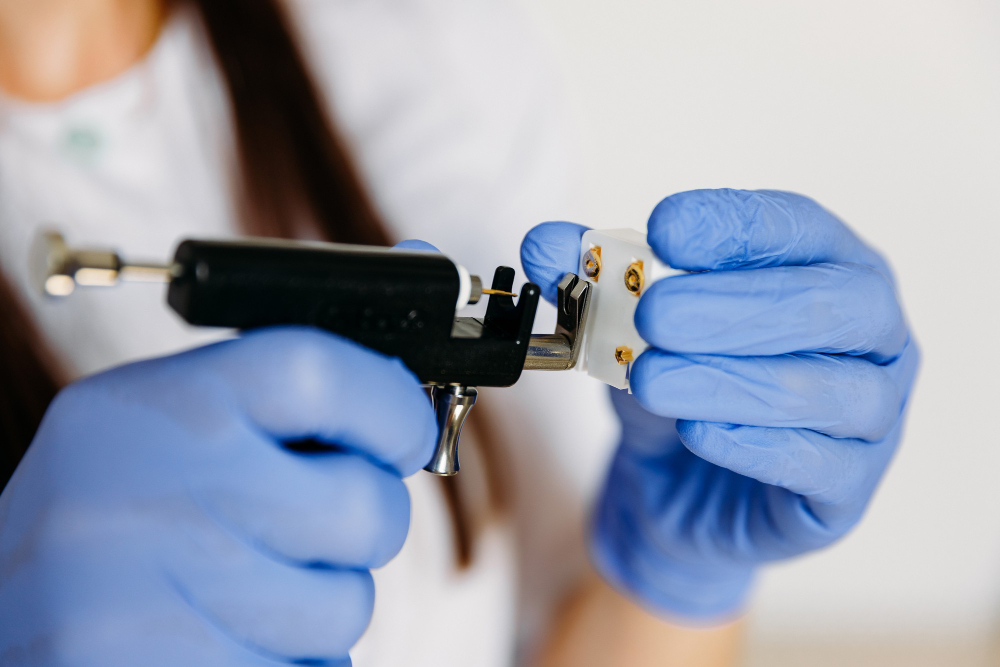
When choosing how to get your ears or body pierced, safety is key. Many people ask, “Piercing Gun vs Needle: Which Is Safer?” This blog will explain both methods, discuss safe ear piercing methods, and highlight the risks of piercing guns and needle piercing safety. By the end, you will know which option is safer for you or your child.
What Is a Piercing Gun?
A piercing gun is a handheld tool used to pierce ears and sometimes other body parts. It works by quickly forcing a stud through the skin. Because it is fast, many shops use it for ear piercings, especially in malls or jewelry stores. However, piercing guns are often made of plastic and can be hard to clean fully. This can raise concerns about infection and safety.
What Is a Piercing Needle?
A piercing needle is a sharp, hollow tool used by trained professionals. Unlike a gun, the needle gently slices through the skin, making a clean hole. Because it is single-use and sterile, it lowers the risk of infection. Most professional piercing studios use needles for all types of piercings, including ears, nose, and body.
Safety Comparison: Piercing Gun vs Needle
Now, let’s compare the safety of both methods. According to the CDC and many health experts, needle piercing is usually safer than using a gun. This is because needles are sterile and cause less trauma to the skin. On the other hand, piercing guns can damage tissue and are harder to clean.
Therefore, most experts agree that needle piercing is the safer choice.
Risks and Complications
Both piercing guns and needles have risks. However, the risks of piercing guns are often higher. The World Health Organization (WHO) and medical journals report these possible problems:
With needles, risks are lower if the piercer uses clean tools and follows safety steps. Still, infection or allergic reaction can happen if aftercare is poor.
Aftercare Tips for Safe Piercing
Proper aftercare is important for healing, no matter which method you choose. But, with needle piercing, healing is often smoother. To keep your new piercing safe, follow these tips:
If you notice any problems, contact a healthcare provider right away.
Expert Recommendations
Most health experts, including the CDC and WHO, recommend needle piercing over gun piercing. They say needles are safer, cleaner, and cause less damage. In fact, many professional piercers refuse to use guns because of these risks. For safe ear piercing methods, always choose a certified professional who uses sterile needles and follows strict hygiene rules.
In summary, needle piercing is usually safer and better for healing. For your safety, consult at Esquare Eye and ENT Hospitals for personalized advice.