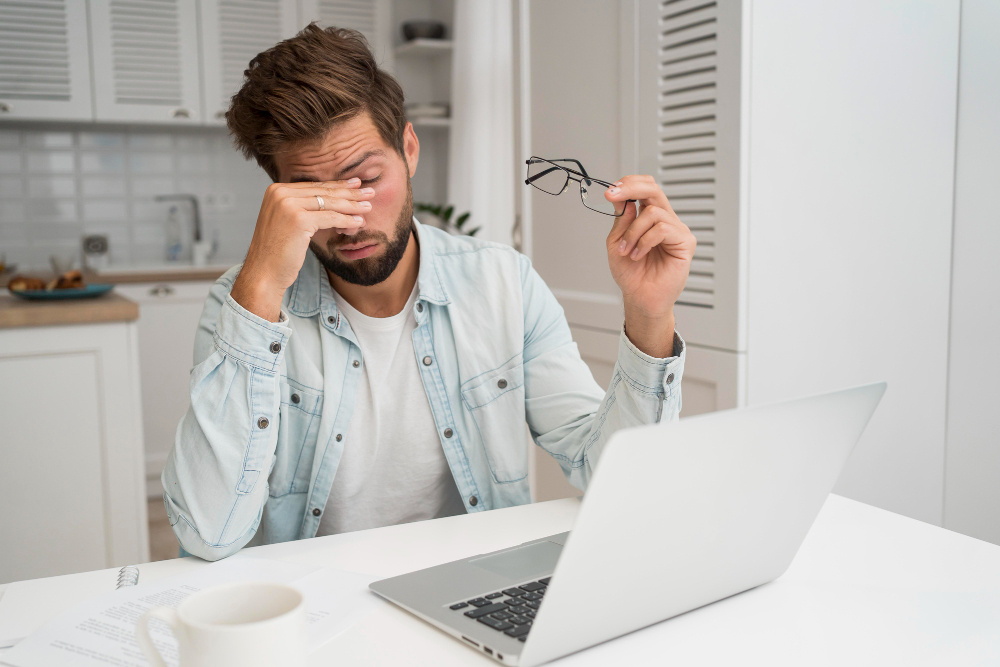
Many people spend hours each day looking at screens. Because of this, “screen time and your eyes” is a topic that matters to everyone. Too much screen time can cause tired eyes, headaches, and blurry vision. This is called digital eye strain. However, you can protect your eyes by changing a few simple habits. Let’s explore how screen time affects your eyes and what you can do today.
How Screen Time Affects Your Eyes
First, it helps to know why screens can bother your eyes. When you look at a screen, you blink less often. As a result, your eyes may feel dry or itchy. Bright screens and small text can make your eyes work harder. Over time, you may notice:
According to the American Academy of Ophthalmology, these symptoms are common for people who use screens for work or school. But you can reduce digital eye strain by making small changes.
Habit 1: Take Regular Breaks
One of the best eye health tips for screen users is to take breaks. For example, you can use the 20-20-20 rule. Every 20 minutes, look at something 20 feet away for 20 seconds. This gives your eyes a chance to rest. In addition, try to stand up and stretch every hour. This helps your body and your eyes.
By following this habit, you can prevent eye fatigue from screens and keep your eyes feeling fresh.
Habit 2: Adjust Your Screen Settings
Next, check your screen settings. If your screen is too bright or too dim, your eyes will work harder. You can reduce digital eye strain by:
Many devices have “night mode” or “comfort view” options. These settings can help reduce eye strain, especially if you work in an office or live in a city with bright lights.
Habit 3: Practice Proper Eye Hygiene
Good eye habits are important for everyone. For instance, remember to blink often. Blinking keeps your eyes moist and comfortable. Also, keep your screen at least an arm’s length away. Sit up straight and keep your screen at eye level. This helps you avoid neck and back pain too.
These simple steps can make a big difference in your daily comfort.
Additional Tips for Eye Comfort
Besides these habits, there are more ways to care for your eyes. For example:
In urban areas or offices, try to get natural light during the day. This helps your eyes adjust and rest.
When to See an Eye Specialist
Most eye strain from screens is not serious. However, you should see an eye specialist if you have:
Sometimes, these symptoms may indicate a more serious issue. An eye doctor can examine your eyes and provide the right treatment or advice. The Centers for Disease Control and Prevention (CDC) recommends regular eye exams for everyone, especially those who spend long hours on screens.
To sum up, protect your eyes from screen strain by taking regular breaks, adjusting your screen settings, and maintaining healthy visual habits. If you have any concerns, consult an eye specialist at E Square Eye and ENT Hospital for personalised advice and expert care.